
The Arctic Debrief: Saab courts Canadian government as it reconsiders F-35 purchase
The Arctic Debrief is a weekly newsletter covering the most important developments in the Arctic region of the past week.

Hello, The Arctic Debrief is nearing 200 subscribers, if you’ve enjoyed the newsletter, please share it with a friend or colleague that may enjoy my work. Every share helps a ton—thank you for your continued support!
In this edition:
- Sweden's Saab courts Canadian government as it reconsiders F-35 purchase;
- Finland updates its Arctic security and foreign policy; and
- Canada, Finland, and the U.S. reaffirm icebreaker building pact
Latest Developments
Sweden's Saab courts Canadian government as it reconsiders F-35 purchase
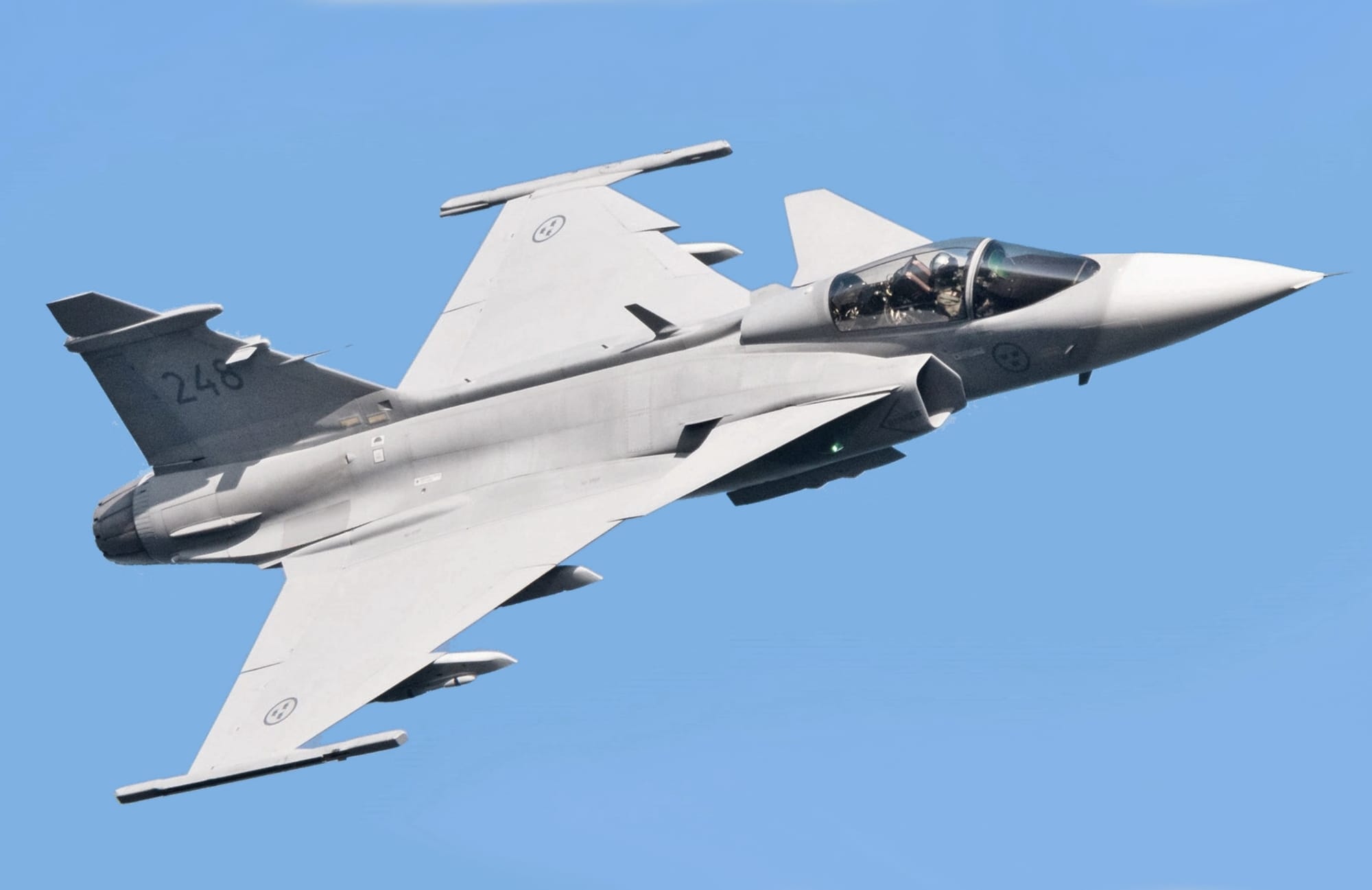
Amid increased tensions with the United States, the Canadian government is re-considering its purchase of a fleet of 88 F-35A Lighting II fighter jets. The idea to cancel or reduce the F-35A procurement has gained popular support due President Donald Trump’s continued tariff war and comments about making Canada the “51st state.”
Canada confirmed an order for 88 F-35A fighter jets in 2023, but following a growing rift between Canada and the U.S., the government has begun to consider alternative platforms. While it is likely to receive at least 16 F-35As that are already in production by Lockheed Martin, it is considering the fate of the remaining aircraft.
In an attempt to capitalize on this, Sweden has strengthened efforts to promote its domestically produced Saab Gripen jets. Government officials and the defence company are trying to incite their Canadian counterparts with the promise of technology transfers and job creation if Canada purchases the Gripen jets.
During a royal visit to Ottawa between Nov. 18 and Nov. 20, Sweden’s King Carl XVI Gustaf, Swedish government officials, and Saab lobbyists met with the Canadian government to promote the jet for the Royal Canadian Air Force.
Proponents of Gripen jet argue that the main benefit is to reduce Canada’s reliance on America and its defence industry, while acquiring a cheaper alternative that will satisfy the operational requirements of the Royal Canadian Air Force (RCAF). However, this movement is more popular among the public and politicians, rather than the Canadian military.
A recent report claims that high ranking officials of the RCAF have sent a letter to the federal government defending the F-35A purchase and stating their opposition to purchasing the Swedish Gripen jets.
In general, as Canadian rhetoric has been to diversify its defence procurement to its NATO allies, the military has been opposed to this, preferring American-made equipment and technology. Additionally, the Canadian military does not believe there is a real threat from the United States and argues it needs to quickly fill national security gaps with the best available equipment, as China and Russia pose a greater and more legitimate threat to Canadian sovereignty.
Finland updates its Arctic security and foreign policy
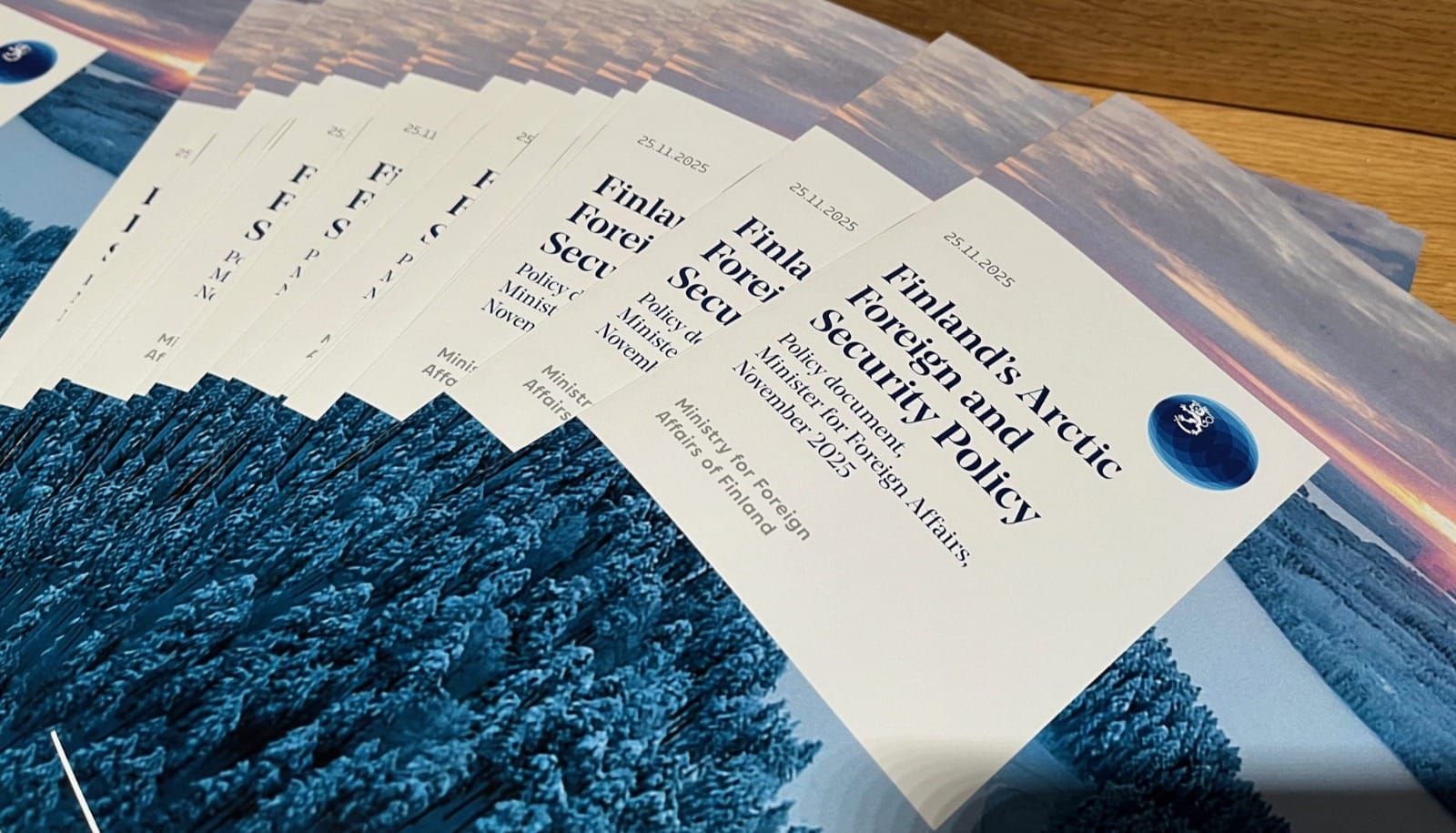
The Arctic is no longer a region of the world that is unaffected by global tensions and geopolitics, acknowledges Elina Valtonen, Finland’s Minister for Foreign Affairs, in the policy document's introduction. The document highlights the country's commitment to increase its focus on the region in terms of economic, diplomatic, and military terms.
“In the new international competitive environment, we must respond to growing economic and military tensions," said Minister Valtonen. "We can no longer assume that the Arctic holds a special status, untouched by international security policy tensions. The race to the Arctic also opens new opportunities for Finland as an Arctic expert.”
Finland outlines its main objective for the region as maintaining an environment of cooperation and peace, but preparing for potential confrontation as great power rivalry continues to raise tensions in the Arctic.
The document notes that Russia’s invasion of Ukraine, China’s increasing interest and involvement in the region, and the impacts of climate change are the main considerations which led to the Finnish's governments new policy stance.
Finland seeks to provide its knowledge and expertise of operating in the Arctic environment to its NATO allies and hopes to encourage the alliance to increase its ability to operate in the high north.
The document specifically raises concerns over China's ambitions to increase its influence over the region, which it is doing so through its partnership with Russia.
This relationship in particular is raising Arctic security concerns and Finland wants NATO to strengthen its military posture in the region.
It also acknowledges the potential of untapped resources which is likely to continue to drive interest in the region as global warming makes it more accessible. Additionally, it seeks to maintain the status quo of Arctic nations maintaining authority over the region, which has weakened since Russia's invasion of Ukraine has made cooperation in the region through the Arctic Council extremely difficult.
Canada, Finland, and the U.S. reaffirm icebreaker building pact

Kristi Noem, U.S. secretary of homeland security, Kristen Hillman, Canada’s ambassador to the United States, and Sakari Puisto, Finland’s minister of economic affairs, met in Washington D.C. to reaffirm their countries’ commitment to the Icebreaker Collaboration Effort (ICE) Pact.
The trilateral agreement, initially signed under the Biden administration in 2024, sets the stage for the three nations to cooperate on the design, production, and maintenance of Arctic icebreakers.
The main goals of the pact is to enhance industry collaboration, share technical expertise, and strengthen collective capabilities between the countries.
While Finland is a world leader in the design and construction of Arctic-capable icebreakers, Canada and the U.S. have been looking to upgrade and expand their fleets and will rely on Finland’s technological know-how to do so. The cooperation aims to strengthen the three nations’ access to the high north, improve their ability to defend the Arctic, while greatly contributing to local economies.
The United States only has four ice breakers capable of splitting ice in Arctic waters, with two of those being over 50 years old and nearing their end-of-life.
In its first year, the agreement has led the United States to order four icebreakers from two Finnish ship builders. There are also plans to acquire additional seven vessels that will be built in America by Bollinger Shipyards in Louisiana and Canadian-based Davie Shipbuilding at a newly purchased shipyard in Texas. Davie’s investment in the Texas facility is close to $1 billion USD.
The U.S. Department of Homeland Security published a document which highlighted that there was an "unprecedented" volume of Chinese military and research vessels operating in or near America's Arctic waters.
The report notes that the U.S. must increase its icebreaker output to be able to compete with China's production rates and that an increased icebreaker fleet will be crucial to Arctic security.
If you are enjoying the newsletter and are looking forward to the podcast it would be a great help if you share the newsletter or the Arctic Pod Patreon page. Thank you for you continued support!