The Arctic Debrief: Greenland back in America's crosshairs
The Arctic Debrief is a bi-weekly newsletter covering the most important developments in the Arctic region.
Hello, The Arctic Debrief has reached 200 subscribers, thank you all for your support. I am hoping to keep working on this project and I hope to take it to its full potential. If you’ve enjoyed the newsletter, please share it with a friend or colleague that may enjoy my work. Every share helps a ton
This week there is a greater focus on the situation surrounding Greenland as it has been one of the main headlines of 2026. While it is difficult to cover the entire issue in a single newsletter, I tried to summarize the situation and what has happened over the past few weeks. I also included an important piece about yet another Russian cargo ship sabotaging a communications cable in the Baltic Sea.
In this edition:
- Greenland back in America's crosshairs
- Finland detains another Russian cable saboteur
Latest Developments
Greenland back in America's crosshairs
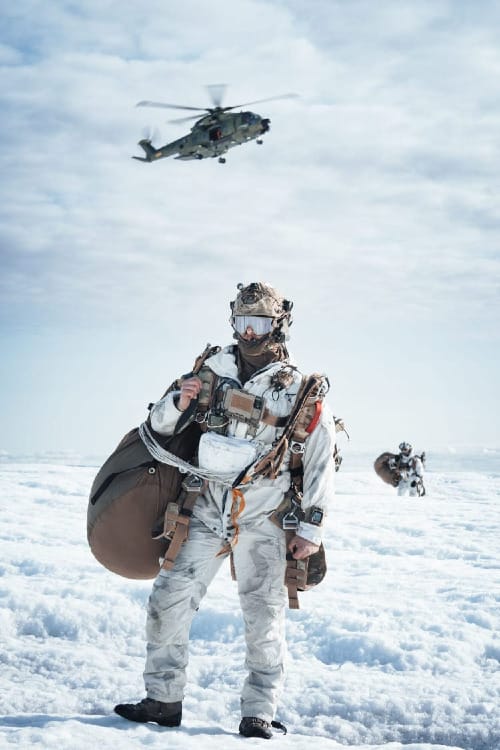
US President Donald Trump has returned his attention to Greenland by starting the new year with a fresh set of media and social media statements demanding that the Arctic island must come under the United States' control through diplomatic or, if necessary, military means.
Those comments launched a political storm with new developments taking place nearly everyday. Below I will try to summarize the events, focusing on the main takeaways.
Europe's reaction and Trump's response
Trump's rhetoric has led to Denmark and its European allies, specifically Finland, the Netherlands, Germany, the United Kingdom, France, Norway, and Sweden, to provide a strong response. In addition to these countries initiating diplomatic talks aimed at resolving the situation politically, they have also sent small troop contingents to the island as a deterrent against a potential American military action.
Those troops are currently participating in a joint exercise on Greenland, known as Operation Arctic Endurance, to demonstrate solidarity with Denmark. The units deployed are small reconnaissance teams of no more than 20 personnel, but their presence serves as a deterrent by creating the risk that any U.S. military operation could lead to casualties from multiple European states.
The countries also published a joint statement showing their support and solidarity with Denmark.
"The pre-coordinated Danish exercise ‘Arctic Endurance,’ conducted with Allies, responds to this necessity. It poses no threat to anyone," reads the statement. "We stand in full solidarity with the Kingdom of Denmark and the people of Greenland. Building on the process begun last week, we stand ready to engage in a dialogue based on the principles of sovereignty and territorial integrity that we stand firmly behind."
In response to this development, Trump has threatened to impose tariffs on any countries opposed to his ambitions without singling out specific countries. However, tariffs on any European nation would affect the EU as a whole.
As part of its diplomatic approach, Denmark has emphasized that any forceful takeover of Greenland would effectively end the North Atlantic Treaty Organization (NATO). Trump, however, has been critical of NATO, arguing that the United States bears a disproportionate share of the alliance’s burden while other members fail to contribute adequately. This has led the US president to threaten, on multiple occasions, to withdraw from the alliance.
While Trump’s concerns about NATO's lack of defence spending held more ground during his first presidency (2016–2020), the situation in 2026 is markedly different. Since Russia’s invasion of Ukraine in 2022, most European nations have significantly increased their defence budgets, expanded arms production, strengthened their militaries, and tightened national security policies. For example, Denmark’s defence spending was about 1.4% of GDP in 2020, but it is on track to reach 3% by the end of 2026.
Trump maintains that Greenland is essential for U.S. national security, claiming it is surrounded by Chinese and Russian vessels. He has also argued that either the United States must take control of the island or it will fall under the influence of Russia and China, asserting that Denmark lacks the military capacity to defend it.
Trump is right that Denmark has a relatively lackluster military presence on Greenland. Its position in the North Atlantic and the post–Cold War security environment allowed Denmark — like many NATO members — to neglect defence spending for decades. However, as noted earlier, European nations have been rapidly rebuilding their militaries in response to Russia’s recent actions. Additionally, Greenland would fall under NATO's protection in the event of an invasion by a foreign adversary.
The Chinese and Russian Threat or lack there of
China did show interest in Greenland and other Arctic regions in previous years, but it was primarily through economic means such as securing land purchases, mining rights, and financial partnerships. However, China has largely abandoned that approach as its relationship with Russia has shifted. As Russia becomes increasingly isolated and economically dependent on China, Beijing has gained access to Arctic resources through agreements with Moscow, including mining, oil, and gas projects.
Neither China nor Russia currently has the capability or strategic need to take over Greenland. Vessels from both states have been spotted monitoring the Arctic region, but they are incapable of being a legitimate threat in that area.
Trump has also argued that U.S. ownership of Greenland is necessary for NATO’s security, but existing agreements already allow the United States to expand its military presence on the island without resorting to force. The U.S. maintains a long-standing base in Greenland, the Pituffik Space Base, and has reduced its presence there voluntarily over the past several decades.
Current treaties would permit a significantly larger deployment if Washington chose to pursue it.
The combination of these factors have pointed to there being ulterior motives behind Trump’s strong interest in acquiring Greenland. Some suggest he views it as an opportunity to shape his legacy, while others point to the island’s substantial natural resource potential.
An on going story...
The U.S. isn't a monolith and there has been opposition to Trump's pursuit of Greenland from within the States. On Jan. 18, a 11-person delegation of U.S. lawmakers, including several Republicans, traveled to Europe to try and calm tensions.
Regardless, the situation remains dynamic with it shifting frequently in response to public statements, social media posts, and brief comments to the press made by Trump and other members of his administration.
Finland detains another Russian cable saboteur
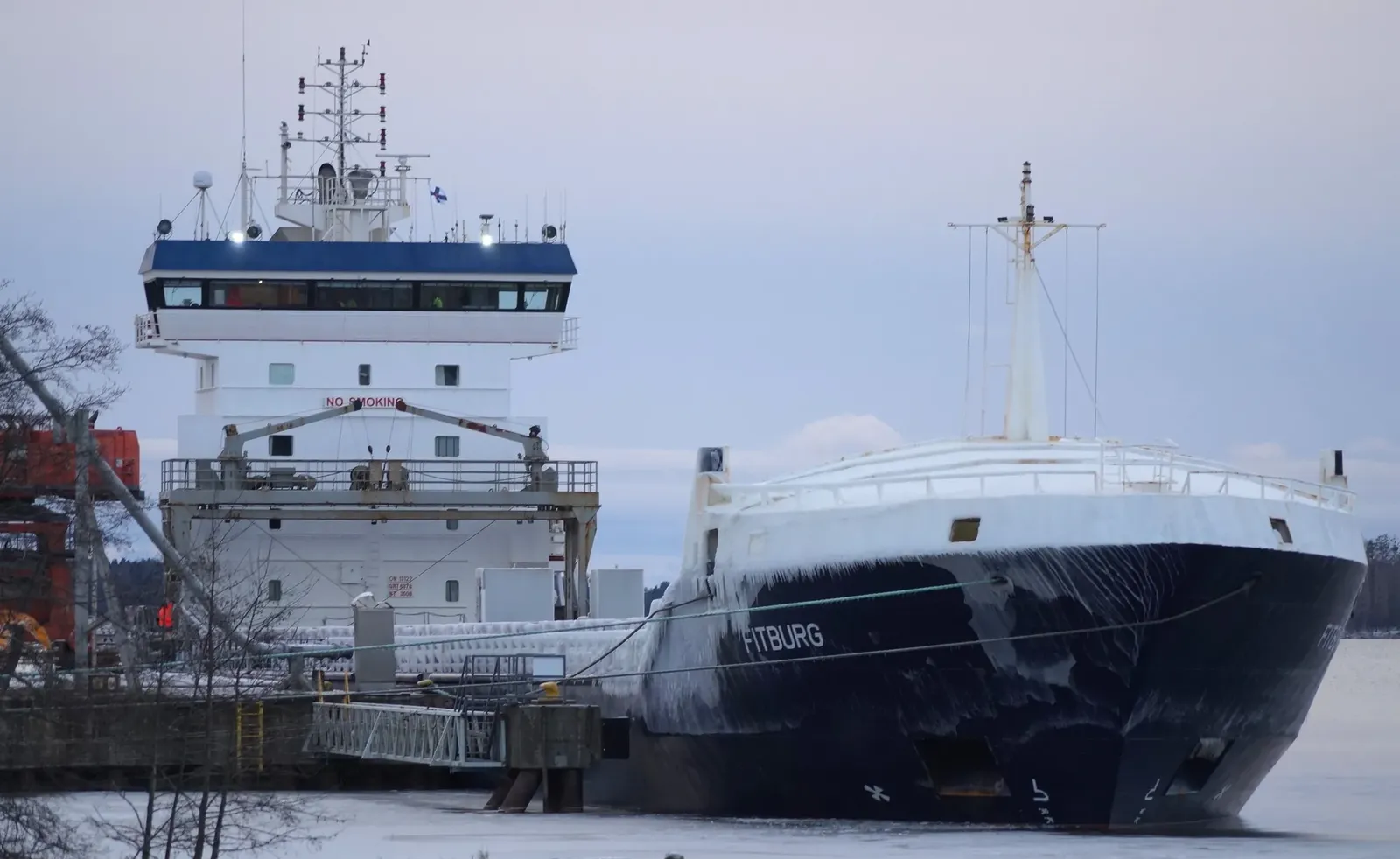
Finnish police detained a Russian cargo vessel under suspicion of damaging an undersea communications cable.
Telecom operator Elisa reported issues with the cable on Dec. 31, 2025, prompting Finnish authorities to immediately respond by dispatching a police helicopter and ship.
Upon investigating the area, the Russian vessel, the 'Fitburg,' was found dragging its anchor across the sea floor. This is how previous communication cables have been sabotaged by Russian ships. Finnish police boarded the ship and arrested 14 crew members.
The crew members and ship will remain in Finnish custody as an investigation is launched into the sabotage. A police spokesperson mentioned that the detained crew members were Russian, Georgian, Kazakh, and Azerbaijani.
A nearly identical incident took place at the end of 2024, which led to NATO member states launching a mission to increase military monitoring of the Baltic sea to prevent sabotage by Russian and Chinese vessels. EU militaries have dedicated ships, aircraft, and naval drones to patrol the region.
This sabotage and other similar incidents are a part of Russia's "hybrid war," which attempts to either hinder European economic, military, and industrial efforts, by sabotaging infrastructure, conducting cyber attacks, and other means of destabilizing the target nation.
If you are enjoying the newsletter and are looking forward to the podcast it would be a great help if you share the newsletter or the Arctic Pod Patreon page. Thank you for you continued support!